
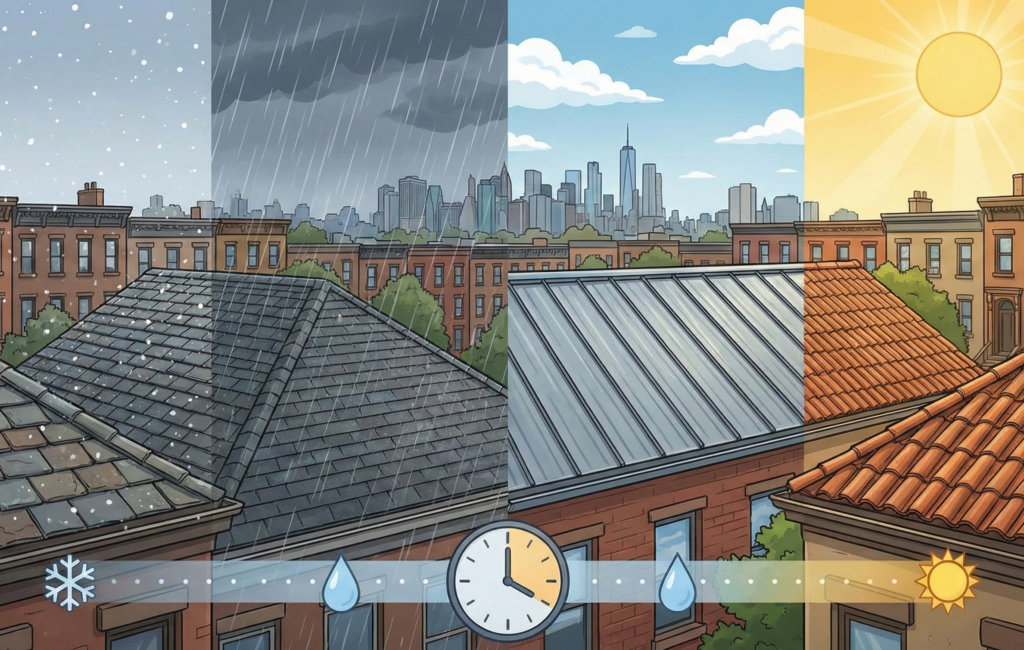
Brooklyn’s weather doesn’t coddle roofing materials. Our coastal location subjects roofs to punishing nor’easters, heavy snow loads, humid summers, salt air corrosion, and dramatic temperature swings that cause expansion and contraction cycles year after year. Understanding how these conditions affect different roofing materials helps homeowners make informed decisions about installations, budgeting for roof replacements, and maximizing their roof’s lifespan.
The same material that lasts 30 years in Arizona might fail at 20 years in Brooklyn. Here’s what you need to know about roofing material lifespans in our unique climate.
Asphalt Shingles: 15-25 Years
Asphalt shingles dominate Brooklyn’s residential roofing market because they balance affordability, decent performance, and aesthetic variety. However, not all asphalt shingles perform equally in our climate.
Three-Tab Shingles (15-20 years) – The most economical option, three-tab shingles feature a flat design with less dimensional appeal. Brooklyn’s freeze-thaw cycles and coastal humidity accelerate their deterioration. Expect the lower end of the lifespan range unless conditions are ideal and maintenance is excellent.
Architectural Shingles (20-25 years) – Also called dimensional or laminated shingles, these thicker, multi-layered products resist wind and impact damage better than three-tab varieties. Their enhanced construction tolerates Brooklyn’s weather extremes more effectively, justifying their higher initial cost with extended lifespan and better warranty coverage.
Brooklyn-specific factors affecting asphalt shingle lifespan include winter ice dams that force water under shingles, salt air accelerating granule loss, and summer heat causing premature brittleness. South and west-facing slopes receive more intense sun exposure, degrading shingles faster than north-facing sections.
Proper attic ventilation extends asphalt shingle life significantly. Adequate airflow prevents excessive heat buildup in summer and ice dam formation in winter, two primary causes of premature failure in our climate.
Metal Roofing: 40-70 Years
Metal roofing has gained popularity in Brooklyn for excellent reasons: longevity, energy efficiency, and superior performance in our weather conditions. Different metal types offer varying lifespans:
Steel Roofing (40-60 years) – Galvanized or galvalume steel with proper protective coatings resists Brooklyn’s coastal environment well. Regular recoating every 15-20 years in high-salt areas extends lifespan. Steel’s strength handles heavy snow loads common in Brooklyn without structural concerns.
Aluminum Roofing (50+ years) – Aluminum naturally resists corrosion, making it ideal for Brooklyn’s proximity to the Atlantic. It won’t rust like steel can if protective coatings fail. Aluminum is lighter than steel, reducing structural load, beneficial for older Brooklyn buildings with weight limitations.
Copper Roofing (70+ years) – Brooklyn’s historic brownstones and upscale properties often feature copper roofing that can last a century or more. Copper develops a protective patina that actually enhances its weather resistance over time. While expensive initially, copper’s exceptional longevity and zero maintenance requirements provide unmatched value for permanent installations.
Metal roofing handles Brooklyn’s challenges exceptionally well. Snow slides off easily preventing ice dams, thermal expansion joints accommodate temperature fluctuations, and proper installation withstands hurricane-force winds that occasionally affect our coastal region.
Slate Roofing: 75-150+ Years
Brooklyn’s brownstone neighborhoods showcase slate roofing’s timeless beauty and extraordinary durability. Genuine slate is quarried stone, a natural product that outlasts virtually every other roofing material when properly installed.
Soft Slate (75-100 years) – Certain slate varieties are less dense and weather faster in freeze-thaw conditions. Even these “soft” slates dramatically outlast asphalt alternatives.
Hard Slate (100-150+ years) – Premium hard slate from quality quarries can protect buildings for multiple generations. Many Brooklyn brownstones still have original slate from the 1800s performing perfectly.
Brooklyn’s climate actually suits slate well. Unlike regions with extreme heat, our temperatures rarely reach levels that stress stone. Winter conditions pose minimal threat to properly installed slate with adequate flashing and underlayment.
The catch with slate isn’t the material itself but the supporting structure. Slate is extremely heavy, 800-1,500 pounds per square compared to 200-300 for asphalt. Your building’s structure must support this weight. Additionally, slate requires specialized installation expertise increasingly rare in the trades.
When slate does fail, it’s typically due to rusted fasteners or deteriorated flashing rather than the slate itself. Copper nails and flashing ensure these components match slate’s lifespan.
Clay and Concrete Tile: 50-100 Years
Tile roofing is less common in Brooklyn than in warmer climates, but it appears on Mediterranean-style homes and some commercial buildings.
Clay Tiles (75-100+ years) – Genuine clay tiles are fired ceramics that resist weather, fire, and pests indefinitely. Brooklyn’s freeze-thaw cycles can crack lower-quality tiles, but premium varieties handle our climate well.
Concrete Tiles (50-75 years) – More affordable than clay, concrete tiles still offer excellent longevity. They’re heavier than asphalt but lighter than slate, making them feasible for more buildings. Proper sealing prevents water absorption that leads to freeze-thaw damage.
Both tile types excel at Brooklyn’s summer heat, reflecting solar radiation to reduce cooling costs. However, their weight and installation complexity limit their Brooklyn adoption compared to markets like California or Florida.
Wood Shakes and Shingles: 20-40 Years
Cedar shakes and shingles offer natural beauty but require more maintenance in Brooklyn’s humid climate. Coastal moisture promotes moss, algae, and rot, the primary enemies of wood roofing.
Cedar Shakes (20-30 years) – These hand-split, rustic pieces absorb moisture more readily than sawn shingles. Brooklyn’s humidity and shade from neighboring buildings accelerate deterioration unless shakes receive regular treatment with preservatives.
Cedar Shingles (30-40 years) – Machine-cut cedar shingles with smooth surfaces resist moisture better than shakes. Regular cleaning, preservative treatments, and ensuring adequate attic ventilation maximize their lifespan in our climate.
Wood roofing in Brooklyn requires committed maintenance. Annual inspections, periodic cleaning, and prompt replacement of damaged sections are essential, more so than in drier climates.
Maximizing Your Roof’s Lifespan in Brooklyn
Regardless of material, these practices extend roof life in our challenging climate:
Regular professional inspections catch small problems before they escalate. Schedule inspections annually and after severe storms. Proper ventilation prevents heat and moisture buildup that accelerates deterioration. Clean gutters prevent water backup that damages roof edges and causes ice dams. Address repairs promptly, small leaks become major damage quickly in Brooklyn’s wet conditions.
Choose Based on Your Timeline and Budget
Your expected length of homeownership should influence material selection. Planning to stay 10-15 years? Quality architectural shingles provide adequate lifespan at reasonable cost. Staying 30+ years or restoring a historic property? Metal, slate, or tile justify their premium pricing with superior longevity.
Brooklyn’s climate demands quality materials and expert installation. The cheapest option rarely proves economical when premature failure requires complete replacement. Invest appropriately for your specific situation, and your roof will protect your home reliably for decades.